
How to Boost AdSense CPC with Better Content and Targeting
When your content doesn’t match what advertisers are bidding for, your CPC drops instantly — even if your traffic stays the same. That’s the silent problem most publishers face: their pages attract visitors, but not the right intent that advertisers value. And when Google can’t identify strong commercial purpose within the first few scrolls, it replaces premium ads with the lowest paying ones.
Advertisers pay more when a page signals buying intent, comparison intent, or problem solving urgency — right from the introduction. If your opening lines clearly state the user’s issue and what the page will help them decide, Google assigns higher-value ad categories automatically.
This guide shows how to raise AdSense CPC by improving user intent clarity, sharpening content signals, and aligning with advertiser demand—explained simply and without any fluff.
1. What Is CPC in AdSense?
CPC (Cost Per Click) is the fee that advertisers have to pay each time a user clicks on an advertisement shown on your site. While CPM is the one that pays for impressions, CPC does payouts only when a click occurs — thus your income depends on both clicks and the worth of each click.
CPC in AdSense is determined by advertiser competition, keyword value, niche demand, and with how much that suits the most high intent search queries. If your articles actually can attract readers seeking for comfortable solutions, comparisons, or buying guidance, advertisers compete harder for those clicks in the form of higher CPC rates.
2. Why CPC Matters More Than Extra Traffic
Many publishers chase traffic thinking more visitors equals more income. But if those visitors come from low value keywords, irrelevant countries, or passive browsing habits, your CPC stays weak.
High CPC happens when:
- Advertisers pay more when the user intent is commercial or comparison focused, because these visitors are closer to making a purchase and more likely to convert. Pages that answer “best,” “compare,” or “review” queries naturally attract higher CPC.
- When there are many advertisers competing for the same keyword, the bidding pressure increases the CPC. However, it is in the areas of finance, insurance, software, and legal topics where the highest competition exists.
- Content that appeals to buyers or researchers who are simply looking for a solution earns clicks that are priced higher since the advertisers want to catch them at the decision stage.
- Traffic coming from countries that are considered developed such as the US, UK, Canada, and Australia results in an increased CPC as advertisers are willing to pay more for audiences that have higher spending power.
- A page layout that keeps users engaged and scrolling helps Google pick better ad categories and formats for your content. Higher engagement gives the algorithm more signals, resulting in better-paying ad placements.
3. Why CPC Drops (Real Causes Many Ignore)
CPC usually falls when the content no longer matches advertiser intent or when the audience shifts into low value segments. Common reasons include:
Topics attracting broad, low intent traffic : When your page pulls visitors who are not actively researching or comparing products, advertisers bid lower. CPC falls because the traffic cannot convert for them.
Content not aligned with advertiser bidding categories : If your article’s topic doesn’t match what high-paying advertisers target, Google shows cheaper ads. Even a slight mismatch between content and ad category causes CPC to decline.
Pages ranking for unrelated or weak keywords : When search engines send traffic based on irrelevant queries, ads become less contextual. Poor keyword alignment leads to lower-value ads and reduced CPC.
Low income or non premium geo traffic increases : If a larger share of your traffic comes from regions with weaker advertiser demand, CPC drops immediately. Advertisers bid more aggressively for visitors from premium countries.
Weak engagement reducing contextual signals : Short sessions, low scroll depth, or high bounce rates confuse Google’s ad matching. When engagement is poor, Google serves generic, cheaper ads — lowering your CPC.
4. Content Types That Naturally Generate Higher CPC
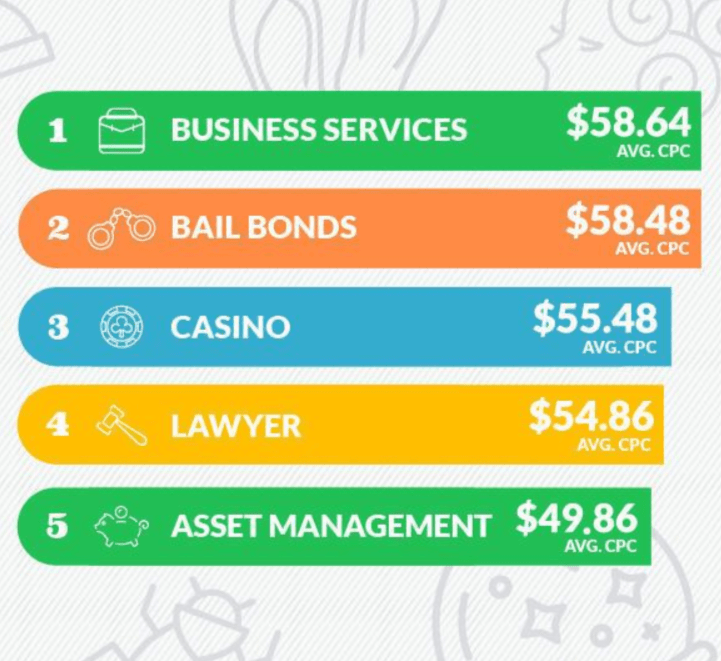
These categories outperform others because advertisers bid aggressively for them:
High CPC Content Types
Money, banking, investing : Advertisers are willing to pay very high bids because such topics clear users’ mind of all the choices and lead them to the brands—those are the conversions that brands value most, hence the high cost conversions.
Insurance, loans, credit cards : These sectors are often characterized by the highest customer acquisition costs and therefore, to secure clicks from qualified readers, advertisers willingly spend aggressively to connect with them.
B2B tools, SaaS, CRM systems : Business software clicks are valuable because a single lead can generate long term revenue, making advertisers willing to pay more per click.
Legal guides : Legal services have extremely high lifetime value. Even one converted client justifies expensive keywords, driving CPC upward.
Job search, certifications : Readers in these categories are career-focused and often close to making paid decisions, which attracts strong advertiser competition.
Tech comparisons / device repair guides
These pages attract users ready to buy or research specific products, leading to higher CPC due to commercial-intent traffic.
Moderate CPC Content Types
Health, wellness, parenting : These attract large audiences with mixed intent—some commercial, some informational—so CPC stays mid range.
Education and career improvement : Advertisers bid decently here because users often search for paid courses, tests, tools, or coaching.
Productivity : Intent is somewhat commercial, but general enough that advertiser competition stays moderate.
Low CPC Content Types
Entertainment : People come here mostly to have fun or chase information, which counts as low intent in advertiser algorithms resulting in weak CPC.
General news : News traffic is broad and unpredictable, and advertisers avoid paying premium rates for non-targeted impressions.
Meme sites / celebrity content : These users rarely click ads with commercial intent. Engagement is high, but conversion potential is low, so CPC remains minimal.
If you want higher CPC, your site must gradually shift toward topics advertisers value.
5. Structuring Content for Higher CPC
Structuring your content the right way helps Google understand user intent faster, which directly improves ad relevance and CPC.
Here are some effective ways to structure your content for stronger CPC signals:
Add problem solution clarity in the first 100 words
Advertisers pay more when the page immediately reflects the intent they’re bidding on. When your introduction clearly states the user’s problem and what the page will help them solve, Google instantly understands the page’s commercial context. This leads to higher value ads appearing earlier in the session.
Include comparison tables
Comparison tables tell Google that the user is evaluating options, which is a high-intent commercial stage. These tables push the algorithm toward serving ads related to pricing, services, tools, and products—categories with some of the strongest CPC rates. They also help users stay longer on the page, increasing contextual accuracy.
Use keyword clusters around commercial variants
Commercial phrases like best, top, software for, services, cost, pricing, reviews, and compare signal buyer intent. When you structure your content around these clusters, you naturally attract advertisers bidding on high-value keywords. This improves ad relevance and elevates CPC across the page.
Add expert style sections
Sections such as Factors to Consider, Mistakes to Avoid, Key Features, or Pricing Breakdown help your content look authoritative and complete. Advertisers trust pages that demonstrate depth because they attract ready to convert visitors. Google rewards this with more precise, higher-value ads.
Keep paragraphs short
Short paragraphs improve readability and reduce bounce rates. When engagement metrics rise, Google identifies stronger contextual signals and serves more accurate ads. Better matching = higher CPC because ads align closely with what users want.
Cover related subtopics on the same page
When your content touches on all related sub-topics—alternatives, use-cases, pros and cons, FAQs—Google’s algorithm can better understand what a page is truly about, removing ambiguity and allowing AdSense to match premium categories for the advertiser resulting in a consistent increase in CPC.
6. How to Improve On Page Signals That Increase CPC
Google evaluates how users behave on a page to decide which ad categories fit best. Stronger behavior signals guide Google toward high value advertisers, which directly increases CPC.
Boost scroll depth
When users move deeper into the page, Google receives clearer indicators that the topic is valuable and relevant. Using short paragraphs, clean spacing, and clear H2/H3 subheadings encourages readers to continue scrolling, which strengthens contextual understanding for ad matching.
Improve the first 300 words
This section is one of the strongest signals Google uses to classify intent. A clear topic introduction, problem framing, and keyword relevance help Google map the page to premium ad categories. Avoid long story intros—make intent obvious early so advertisers can compete for that topic.
Use intent reinforcing elements
Intent signals help ads match commercial topics more precisely. Adding structured elements clarifies user intent and gives Google more context:
- FAQs that address buying decisions or comparisons
- Pros/cons lists that show evaluation behavior
- “Best options for…” segments that highlight decision intent
- Real-use examples that show practical application
7. Keyword Targeting Strategies That Influence CPC
You don’t need to chase only high CPC keywords — the real gains come from targeting queries that signal buying, comparing, or problem-solving intent. These terms attract advertisers willing to bid higher because the user is closer to action.
Target comparison-based queries
Searches that compare products, tools, or services signal decision intent.
Example: “Best CRM for freelancers” attracts far higher CPC than “CRM meaning” because advertisers know the user is evaluating options.
Target professional search queries
Profession-based keywords attract premium bidding since the audience is career-focused and valuable.
Example: “Certification for accounting jobs” triggers ads from training providers, SaaS tools, and career platforms.
Target problem solving queries
When users search for a fix or solution, Google serves service based and product ads relevant to that issue.
Example: “How to fix laptop hinge noise” pulls high CPC repair, warranty, and product ads.
Target buyer ready long tails
Long-tail keywords that show clear purchase intent deliver stronger CPC because advertisers compete for these readers.
Example: “Which budget microphone is best for podcasting” shows the user is ready to choose a product.
8. Using Internal Linking to Strengthen CPC Signals
Internal linking directly shapes how Google interprets a page’s intent, which affects the CPC categories your pages qualify for. Strong internal link structure pushes Google toward showing higher value ads because the overall topical theme becomes clearer.
Here are the most effective ways to structure these links for better CPC:
Create topic clusters
Group all related articles under one tightly connected cluster. This forms a focused content ecosystem, helping Google confidently match your pages with premium advertiser categories.
Link high CPC pages together
Pages on finance, SaaS tools, B2B, or legal topics should link to each other. This reinforces high-value intent and reduces the chances of Google assigning irrelevant, low-paying ads.
Avoid linking to unrelated low value topics
Linking a high CPC article (e.g., insurance or software tools) to low value topics (e.g., memes or entertainment) confuses Google’s contextual signals and weakens CPC relevance.
Use keyword aligned anchor text
Anchors like “best tools,” “insurance guides,” or “loan comparison” help Google understand what the linked page is about, improving ad category alignment and CPC potential.
9. Technical Improvements That Raise CPC
Strong technical performance helps Google match your pages with higher-paying ad categories. When the page loads smoothly and users stay engaged, ad relevance improves automatically.
Faster load time improves ad visibility : Slow pages delay ad rendering, reducing impressions and lowering CPC. Faster loading ensures ads appear exactly when users are most active.
Stable layout reduces layout shift penalties : If your layout moves while loading, Google downgrades UX quality. A stable structure keeps ads in predictable, high performing positions.
Clean CSS improves ad placement : Lightweight, minimal CSS helps Google identify clear content sections, resulting in more accurate contextual ad matching.
High contrast design boosts reading focus : Better readability increases time on page, and higher engagement signals help Google serve premium categories.
Reduce script conflicts with ads : Too many third party scripts can interfere with ad loading. Cleaner script usage ensures better ad performance and a higher chance of premium CPC ads appearing.
Conlcusion
Boosting AdSense CPC is not all about chasing high CPC keywords, but another level is to channel your content and structures towards the right advertisers. When people see a connection between your page content and intentions of the commercial industry, they’ll provide real solutions and maintain good, demand building on page signals for you, allowing Google to place more valuable adverts upon your page.
Constant improvement of your site content quality across all pages in coherence with healthy advertiser intentions will certainly contribute much more not just CPC, but overall profitability, trustworthiness, and search engine friendliness.
FAQs
How do I make $100 a day on AdSense?
You need a mix of high-CPC topics, strong search traffic, and optimized ad placements. Focus on commercial niches, improve engagement, and use strategic placements such as in article ads, under intro ads, and after H2s. With the right CPC + CTR + traffic volume, $100/day becomes realistic.
Which niche has the highest CPC?
Finance, insurance, legal, B2B software, and medical services consistently generate the highest CPC because advertisers in these industries compete aggressively for qualified leads.
How do I make my ads great content for AdSense?
Match your content to search intent, keep the first 100 words clear, add comparison sections, and structure posts for easy scanning. High quality content improves ad relevance, which increases both CTR and CPC.
How to find high CPC keywords?
Use tools like Google Keyword Planner, Ahrefs, or Semrush to analyze “cost per click” and commercial intent. Look for comparison keywords, “best + service/tool” terms, problem solving queries, and long tail buyer searches.
Which country has the highest CPC rate?
Regions like the United States, Canada, Australia, and the United Kingdom typically have the highest CPC because advertisers pay more to target premium audiences in high income markets.