
How to Develop a Cross Network Advertising Strategy
Cross Network Advertising: Nowadays, an audience rarely restricts itself to one platform. They Google, scroll through Meta, watch videos on TikTok, and even surf LinkedIn. Such an isolated approach will only result in a missed opportunity and waste of ad budget.
Cross Network Advertising is ensuring that the campaign synergizes across the platforms, maintaining the shared integrity of the brand messaging; it considers how adaptable the message is to each network and finally measures all inter-network performances.
If tuned finely, cross-network advertising can:
- Reach a particular audience wherever this target audience is on the Internet
- Ensure a consistent message through all the channels
- Weigh each advertisement on its own under aggregated data
- Realize more conversion by distinguishing the impact of each platform.
With this guide, you’ll learn how to create and implement an effective cross network advertising strategy that works on Google, Meta, TikTok, LinkedIn, and elsewhere.
What Is Cross Network Advertising?
As we’ve understood, the term multiplierized evolution would mean to make iterations on an advertising classical concept across various ad platforms with the execution of messaging and targeting logic in complete integration.
The very understanding of a way simple has remained for an average multichannel advertiser, which basically advocates the extremes of advertisement.
We must always remember that I speak here of integrating data systems, creativity, and measurement systems across all marketing communication mediums in such a way that the phrasing of the brand communicates so well for the channel context that at least it is simultaneously supported by one common brand identity.
Core Elements of an Effective Cross Network Advertising Strategy
These four pillars in cohesion culminate into an effective cross network advertising strategy and ensure the adjustment to deliver consistency of performance of campaigns across each platform, and thus reduce ad wastage to some extent, maintain ad brand conformity, and track and measure at least the ad’s results through the marketing funnel.
1. Audience Coherence
Audience cohesion means to understand ad networks where target users exist and how those users behave on platforms so that overlapped segments can be identified and prevent those same users from being targeted twice with the same advertisements.
- Demographic and behavioral data can be sourced from Google, Meta, LinkedIn, and TikTok.
- Cross-platform overlaps can come into view by way of Google Analytics, Meta Audience Insights, and LinkedIn Matched Audiences.
- Segment the audience by intent and stage of their journey as awareness, consideration, or decision.
- Do some campaigns excluding audiences that are engaging with your brand to discount advertising money on them.
2. Message Consistency
The messages must become one joined voice, rather thereby adapted to the particular channel, each channel considered in its own form and nature. The creative execution could look completely different; one may be a TikTok video, while the other creeps into LinkedIn with a carousel. Although the expression of the brand story and constitution may be contrary, the value proposition must come exactly the other way.
- Have a core message or a campaign idea on all platforms.
- Change the tone and style of messages depending on the channel used in those campaigns (LinkedIn would be professional; Instagram would be visual storytelling; Google Ads is direct response).
- Be consistent with your brand recognitions in iconography, colors, and tagline.
- Send a unified message through your ads and landing pages.
3. Data Integration
Data integration brings all ad analytics under one roof. Each advertising platform-Google, Meta, LinkedIn-between metrics and reporting styles. As there is no integration, insight gets fragmenting and optimization is hard.
- Join your ad data using some other tool such as Looker Studio, Power BI, or Supermetrics.
- Connect your CRM, HubSpot or Salesforce to ad accounts for closed loop-reporting.
- Standardize the metrics-spend, clicks, conversions, impressions-towards all networks.
- Set up automated dashboards that guide the teams to real-time performance.
4. Attribution Modeling
This attribution model says that every network results in conversions. While the last click or any other one channel carries credit, the entire user journey from awareness to action is under consideration.
- With Google Analytics 4 or Adobe Analytics, see the full path of conversion through multi-touch attribution models.
- This helps to track assisted conversions and understand whether marketers on other platforms like Meta or TikTok help to later give rise to search or direct sale.
- Try out different attribution models (linear, time decay, position based) that best match your customer journey.
- Match as many as possible, including those that apply to both online and offline, for a greater-all-encompassing mapping.
5. Audience Research and Mapping
Analyze the exact times at which the audience consumes media. The specific demographics and behavioral data need to be reviewed by Google Analytics, Meta Audience Insights, LinkedIn Campaign Manager, and TikTok Business Center.
Build detailed personas to find those audiences who perform best on particular platforms. Avoid duplicating them in a way that causes dissonance in how the ads should resonate differently across the ad environments.
Choosing the Right Platforms for Cross Network Advertising
The platforms can be said to each be predisposed to accepting campaigns based on differing goals. Choosing a channel depends on audience intent, content format, and cost efficiency.
| Platform | Best For | Ad Formats | Targeting Strength | Common Use Case |
|---|---|---|---|---|
| Google Ads | Search Intent | Search, Display, YouTube | Keyword & Intent | Lead Generation |
| Meta (Facebook/Instagram) | Broad Reach | Carousel, Reels, Video | Behavioral & Interests | Brand Awareness |
| LinkedIn Ads | B2B Marketing | Sponsored Posts, InMail | Professional Data | B2B Lead Gen |
| TikTok Ads | Gen Z/Millennials | Short Videos | Engagement & Interests | Brand Recall |
| Programmatic | Retargeting | Display, Native, CTV | AI-Driven | Conversion Boost |
Crafting Consistent Yet Adaptive Creatives
While consistency is key, execution must look different from platform to platform.
- Google Ads: Need to push intent driven headlines paired with strong CTAs.
- Meta & Tiktok: Engage on visual storytelling and short form video.
- Back in LinkedIn: While decision makers demand professional tones with solution focused messaging, the freelancers alike disengage once the thought and action marketing goes stale.
The central creative thought needs to be presented with different visuals, tones, and CTAs working with an entirely distinct network and user behavior perspective.
Tracking and Analytics Integration
Tracking measures performance across networks. Override UTM parameters on all ads and interconnect data sources of choice through any of the existing tools offered (Supermetrics, Funnel.io, Google Data Studio).
The Platform APIs integration for unified reporting allows seeing conversions, engagement, and assisted clicks in one view. This view, with data structures, will promote faster decision making while optimizing budgets.
Budget Allocation and Optimization Framework
Split budgets along audience engagement and conversion performance rather than equally.
- Start with 60% of the media budget on high intent channels (Google Ads, Meta).
- Spend 20% on awareness channels such as TikTok or YouTube.
- Reserve 20% of the budget for trial and error experimenting with new ad formats or retargeting.
Track CPC, CPM, CTR, and ROAS per channel while campaigns are active and use automation to alter spend allocation dynamically. Delivery optimization, therefore, must be based on dynamic and real time outcome recording from Google Performance Max and Meta Advantage+.
Aligning Campaign Timelines
Mutual alignment means the brand message is nurtured across channels.
For example, one could run awareness campaigns on both Meta and TikTok. Then, after the audience has shown some brand searching activity, the team could insert some Google search ads. This way, the layered approach first lends itself to creating some brand familiarity, and then conversion campaigns begin to take the forefront.
Work on time coordination through a schedule planner or shared dashboard so that conflicting campaigns won’t run at the same time.
Data Driven Optimization & AI Automation
Today, AI has become one of the zeniths of advertising across networks. Google Smart Bidding, Meta Advantage+, or TikTok Smart Optimization takes care of the decision: what targeting and delivery criteria to use, based on signals sent.
The machine learning model ingests the data of engagement, cost, and conversion to make a decision on where the next impression should be placed on an ROI basis and where it should never be served. The AI-based bidding strategy will bypass human judgment and management competencies, actually improving efficiency when used properly.
Building a Unified Cross Network Dashboard
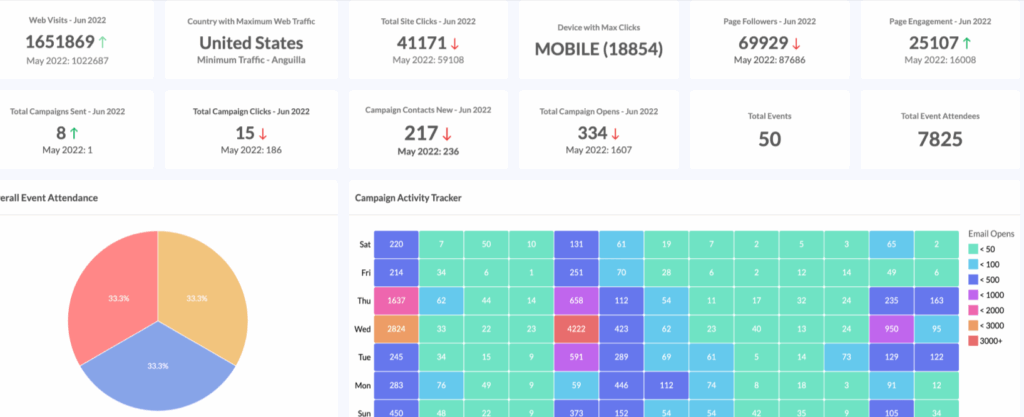
A single dashboard would have to be a must when it comes to managing and measuring ad performance across various platforms. This would mean toggling between Google Ads, Meta, LinkedIn, and TikTok dashboards or going through the results would make analysis much faster and would further quicken data-driven decisions.
Why a Unified Dashboard Is Important
- Visibility into performance on every advertising network.
- Minimizing the potential for manual error or inconsistency in reporting.
- Maximizing optimization and budget reallocation.
- Identify which platform is driving the most conversions.
- A really good way of coming full circle with understanding your ROI and marketing contribution.
Key Metrics to Track
1. Click Through Rate (CTR)
This shows how capable the ads are in grabbing the viewer’s attention. The good thing here is that CTR is complete; allowing one to know that his/her creative and targeting are timely and relevant. It may be used further to narrow down the platforms that provide the most engaged ad experience.
2. Cost Per Acquisition (CPA)
Indicates how much it costs for one conversion or lead conversion. Viewing CPAs across networks tells which channel is cheap and where budget emphasis should be added.
3. Return On Ad Spend (ROAS)
This gives any amount of revenue that the advertisement has created versus the amount of money that has been poured into that advertisement. ROAS, being tracked for each platform, helps prioritize investment in the networks that are performing best.
4. Engagement Rate
They measure the sort of interaction a user can have with an ad, be it liking, sharing, commenting, or saving. The higher the rate of interaction, the better the ads will get across to viewers, more on visual platforms like Meta and TikTok.
5. Assisted conversion
It tracks when a platform has contributed to conversions or in a conversion somewhere along the accepted path of interaction, it was not the TV interaction with the user. This indicates the worth of awareness campaigns and aids in enhancing attribution models.
Conclusion
As a summary, the productive execution of a cross network advertising strategy fastens more on having that one awesome ad campaign. Chances are your platforms, data, and creatives have to be aligned to the performance yardstick.
All campaigns perform in harmony; the budget moves in tandem with the analytics, brands start taking steps, and better ROI is earned.
FAQs
What do you mean by cross network advertising strategy?
Cross network advertising strategy implies management of campaigns spanning across different advertisement networks with unified targeting, messaging, and tracking systems.
How else is it different from multichannel marketing?
Multichannel marketing, as its name suggests, considers the platforms individually, whereas cross-network marketing takes all data and creative execution across the platforms toward a common goal.
What are the best tools for cross network tracking?
Aggreat tools-informed choices include GA4, Supermetrics, Funnel.io, and Looker Studio for merging multi-platform ad data.
How often should budgets be rebalanced across the networks?
You constantly track every performance report on a weekly basis and then alternate budgets biweekly or monthly depending on the ROAS-cost ratio of all sorts.
Will there be opportunities for small and medium companies to do cross-network advertising?
Rightly so. Even with a tiny budget running through paid campaigns on Google and Meta assures efficient spending and consistent branding across any user contact points.