
How Search Experience Optimization Impacts SEO and How to Improve It
Search Experience Optimization (SXO) is an end-user strategy to ensure a good interaction occurs on the site from the moment the webpage is plucked up in the search results until any desired action is carried out by a user. It is a subtle way of saying one cannot really play with SXO in order to get a better page ranking, but they work for the facilitation of a smooth, supportive, and stimulating user journey that naturally confers higher visibility and better conversions.
Under its umbrella, SXO makes a website easier to navigate and keeps page load times down; create content that answers user queries; and fortify it with trust signals, such as reviews and credible backlinks. Finally, the website would be like an enchanting temple in heaven saying goodbye to its guests but urging them to stay and come back.
Since competing keyword search environments require SXO to allow a brand to genuinely stand out, content, structure, and user intent must align with how the modern-day searcher thinks. Within this article, we will explore the means and manners of SXO concerning its very core, why the concept matters today, and how you can go about exploiting it for the improvements of search and user experience.
What is Search Experience Optimization (SXO)?
Search Experience Optimization (SXO) essentially is the merging of good UX with traditional SEO. In plain terms, SEO tries to rank a page while SXO analyzes everything that might possibly happen to the user after the URL has been clicked. What next? Does the content serve that purpose? Is it easy to browse? What experiences make the users stay, interact, and take some action?
With an easy definition to go by, the purpose of SXO is to attract users and satisfy their search intent to ensure the user performs “something” worthy of their time, be it reading more, subscribing, or purchasing something.
SEO vs. SXO: What’s the Difference?
| Aspect | SEO | SXO |
|---|---|---|
| Primary Focus | Ranking higher on search engines | Providing a great experience for users |
| Goal | Increase website traffic | Increase engagement, satisfaction, and conversions |
| Optimization Target | Search engine algorithms | Human behavior and expectations |
| Approach | Keywords, backlinks, meta tags | Content clarity, usability, speed, intent alignment |
Why SXO Matters in the Modern Search Landscape
Search engines today are so advanced in website analysis that Google does not just consider keywords and backlinks; it tracks user navigation on a webpage to really judge how useful that page is. Give click-through rate, bounce rate, dwell time! These feel very strong experience-level signals to your site.
Relevant behavior signals influencing ranking are:
- Click-through rates : The willingness of users to click upon a certain title and description.
- Bounce rate : The indicator of a visitor leaving really quickly without any engagement, questioning the validity of the page against their expectations.
- Dwell Times :The BRT (backing return time) is measured on a page-this reveals just how much content value exists, and how many users are engaged in it.
Core Elements of SXO
In short, given all of these characteristics, SXO surely involves content aligned with the design and usability that the user expects. These are the core components to consider for your working SXO strategy.
1. Search Intent of Users
This is essentially what forms SXO: having awareness of the intent with which someone is searching because every query has some kind of intent behind it, and your content needs to serve that intent by satisfying the user.
Search Intent Types:
- Informational – The user wants to learn or figure out something; search queries go something like “how to improve website speed.”
- Navigational – The user wants to go to a known brand or only to that page, “YouTube login.”
- Transactional – The user wants to take some kind of action, be it purchase (buy protein powder online).
When a content present actually suits the intent, the user felt empathized for and will likely stay to browse and convert; if it is a kind of mismatch-the kind of mismatch where the site serves sales copy to a prospect wanting basic information-it’s an exit-within-seconds engagement equals ranking & conversions take the hit.
2. Content Quality and Relevance
Search Experience Optimization (SXO) rewards very well crisp, useful content for its users. A user should feel they spent time well in having experienced an added value for themselves through your webpage.
Key Practices:
- Clear : The writing has to be a solution or at least an attempt to solve a user’s problem, and never just a filler.
- Always try to use keywords in a natural manner; let that be the way a search engine links the keyword to the content-theme, instead of directly exposing the content to keywords.
- Keep useful terms and headers set as H1, H2, H3 separated from one another; keep paragraphs short so that the reading is digestible and easy on the eyes.
Relevance is also one half of the quality. One should provide information about all aspects of the topic so the user will not have to come back to the search engine looking for that missing chunk of information.
3. Website Navigation and Architecture of Information

Website satisfaction rate, therefore, aligns closely with the comfort that a design affords a user; the more hurdles in the act of finding something, the more frustrated a user gets, and the more he stays away.
Important Considerations:
- Keep menus smooth, classy, on a logical hierarchy, and intuitive.
- Other internal linking should be there to let the user finally go further deep into the site while helping search engines in analysis of page relationships.
- The attributed scores should be accurate for the label they carry or at least the path they lead to.
Reduction in structure means higher decision-making by the time of visiting.
4. Page Speed and Technical Performance
One nap in fast pages is to beat user satisfaction into…Pause for two hefty seconds; he goes straight out to exit from a page, killing ranking and engagement!
Main Factors Taken Under Consideration:
- Everything revolves around fast loading and low bounce rates for better user flow.
- Performance is measured in Core Web Vitals (LCP, FID, CLS).
- Good-performing mobile sites must operate through any kind of network condition.
Trust emerges from technical stability, which then acts to simplify and make reliable the actual process of browsing.
5. Mobile Friendly Websites
Since most users are on their mobile phones, a mobile-first approach is a must. Responsive sites adapt their layout and content according to the screen size.
Consider requiring any of the following optimizations for your site:
- Use an adaptive layout that reorganizes itself for small-screen use
- Allow generous spacing for reading and font sizes that will not oblige users to zoom or scroll horizontally
- Tap targets should be easy for the users to tap
The interactivity will re-channel with the users empowered to surf on any type of device from the offsite.
6. Visual & Interactive Experiences

Images need to reinforce quick perception of the user, if rightly used.
Some improvement techniques include:
- Images, diagrams, or videos could all be part of content.
- Buttons and CTAs should speak clearly for themselves, leaving no questions on what should be done next.
- Maintain a clean and smooth approach so visuals are there to aid the message rather than being too aggressive.
Evenly balanced visual appeal invites exploration as well as retention.
7. Conversion Optimization (CRO) Alignment
Before implementing any SXO process lies the resolution of any possible confusion or discussion that might prevent the user from taking action.
Conversion-Friendly Practices:
- There should be clear calls to action telling the user what to do next-i.e., “Sign up,” “Download,” “Request a Quote.
- They should consider removing unnecessary steps.
- Checkout or inquiry processes should be straightforward.
Roadblocks in the journey will definitely halt conversion rates.
Key Metrics to Measure SXO Success
User behavior and subsequent engagement metrics must be monitored in order to know if the SXO efforts have become successful. These are the very real metrics serving the purpose of determining whether the visitors can extract any utility from their interaction with the content of your website or if the web itself is able to provide a smooth and satisfying experience for them.
1. Dwell time and average session duration
These foreign terms mean that users stay longer on a site or page. A longer span is indicative of users engaging with the topic, being interested in it, and most certainly having some aid from the information in the interim. The other way round, having a short dwell time could be due to confusing content, irrelevance, or incorrect page architecture.
2. Bounce Rate and Exit Rate
- Bounce rate counts those who exit after viewing just one page.
- Exit rate shows the page at which the exit took place.
A high bounce rate caters to the sentiments that a particular page is either not fulfilling the user’s intent or suffers from usability blockers. It would be wise for an organization to remove any friction and instead add clarity to improve the user experience.
3. Click-Through Rate
CTR is the percentage that says every time your page appeared in search results, how often do users click on it. If there is a high CTR, the searchers must find the title and the meta description appealing; it, on the other hand, could highlight that the CTR is low because of a contradiction-very high ranks but is not compelling enough to receive clicks.
4. Page Speed & Core Web Vitals
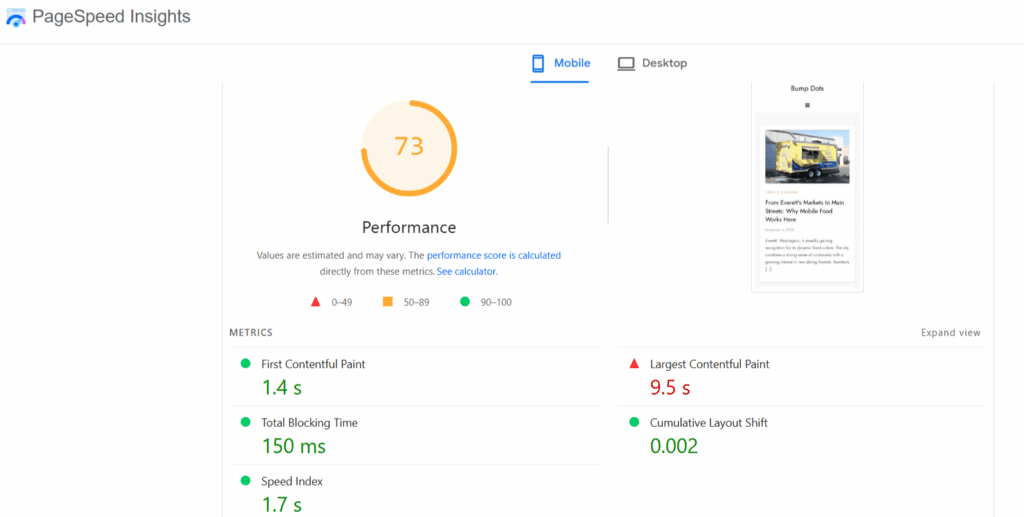
If there is an excess of loading time, then it kills all of the customer satisfaction, interaction, and engagement; and if loading is slow, then it is another reason for users to bounce. The Core Web Vitals comprise an indicator system that measures loading performance of a site, how users engage with that site, and visual stability. Focusing on this particular technical improvement is one of many aspects which stand in delivering a great user experience.
5. Conversion Rates & Goal Completions
So really, SXO is about the actions people actually want to take signing up to anything, calling, purchasing, or downloading. Conversion tracking tells us whether or not the experience design and content had really led the user along the prescribed user journey.
If always tracked, these metrics will identify where to intervene and which SXO techniques will deliver the maximum results.
Practical Steps for SXO Implementation
Application of SXO needs a methodical approach that revolves around content and user experience. The following are the main processes-a more comprehensive set of steps-that are required to define the searching experience that draws the users, engages them, and converts them adequately.
Step 1 : Study User Intent and Search Needs
The initial point of attention in user intent studies is to take into account every alternate end-goal a user may be entertaining in the process of keying in his query. Search intent basically dictates the type of content or experience that will help satisfy the user’s intent.
- How do users intend to enter some of these popular queries: Informational, navigational, or transactional?
- Judge how Google deems the usefulness of your keywords by leaning towards top pages.
- Explore questions asked in forums, FAQs, and community discussions that somewhat circle around actual expectations and pain points.
Hence, following from an intent-fit page that genuinely manages at least one of the user needs by satisfying one class of user requirement leads to better engagement and ranking stability.
Step 2 : Improve On-Page Content Experience
Once the intent is highlighted, start thinking about the presentation: It must be clear, legible, and interesting.
Consider:
- An unambiguous structure : Make use of headings and subheadings. Use short paragraphs for more than one way to quickly scan, and to be understood.
- Legible letterforms : Pick something with a nice font size and spacing.
- Pleasing spreads : Break textual information into bullet points, highlighted boxes, or visuals- all of which serve as aids in comprehension.
For getting baited with honest answers, iyogbes could increase the time user spends on that webpage with an easier content to read.
Step 3 : Page Load & Core Web Vitals Optimization
With the user’s impatience at hand, the longer a website takes to act, the more attitude its bounce rate will assume in the spotlight, so the main components of SXO are emphasized for speeding up the site.
Technical optimizations:
- Image compressing : Resize your pictures and compress them to occupy less space.
- Browser caching : Cache the files that users frequently attempt to access to load on time in their next visit.
- Minify : Minimize the CSS, JS, and HTML.
Next comes measuring Core Web Vitals (LCP, FID, CLS) that run smoothly through mobile networks or entry-level devices.
Step 4 : Make Navigation and Internal Linking Simpler
The user shouldn’t have to guess where to get what they want. Crystal clear navigation sets just the right amount of user delight, while crawlability benefits.
Focus on:
- Logical category structure : Group contents in neat sections.
- Breadcrumb navigation : Allows users to pinpoint and get around the pages quickly.
- Internal linking : Take users to other relevant topics to make browsing the whole content easy.
Easy navigation keeps visitors for a longer time, watches more pages, and let’s conversions.
Step 5 : Promote Design with UX Principles
This means that good design is beautiful but fairly predictable and intuitive from each angle.
Key UX factors:
- Establishs page layouts in such a way that the user need never learn navigation again.
- Make sure sufficient white space is left between elements for visual comfort.
- All interaction elements should be easy-to-do, intuitive-to-do, and click-based.
Design should act for the content, foregrounding it slightly, never obscuring, confusing, or distracting the user for instance.
Step 6: Build Conversion Processes
UX sells very naturally and on the promise; the journey, however, should be easy and frictionless.
Conversions get arranged by:
- Pointer CTAs fairly directly toward a clear action such as “Sign Up,” “Get a Quote,” “Download Guide.”
- Keep your forms brief and relevant-only ask for pertinent information.
- Making the very last step in checkout, registration, or inquiry so easy that no one can walk away at this point.
An unobstructed last conversion stage gives the user the feeling that he or she is performing the very last step of the desired action, thus converting user engagement into actual and tangible results.
SXO Tools and Resources
Search Experience Optimization must analyze and optimize user behavior, performance, and interface design. The basic tools that intervene at different stages of the SXO processes include:
- Google Analytics: Track traffic data, analyze user engagement and behavior, time spent on a user session, conversion path, etc. It lets you know what is working and what is not working on a site.
- Microsoft Clarity: It helps in making heatmaps and recording hordes of sessions to see where users move, scroll, or click on your pages to fix friction points and usability issues.
- Hotjar: Heatmaps and scroll maps like Clarity are provided by Hotjar, which also considers user feedback. This feedback will serve as a direct channel to the user’s actual experience and will help highlight areas in layout or content that require improvements.
- GTmetrix: It analyzes all the aspects of loading time, from server response time to file weight, making it a great bottleneck detector.
- PageSpeed Insights: Measures performance of pages both on desktop and on mobile and suggests improvements for speed, along with Core Web Vital.
- Figma: A collaborative design tool for creating mockups, layouts, and UI prototypes. It plans the lay-outing of the page and user flow before implementation.
Conclusion
Searching Experience Optimization is about providing smooth and pleasant experiences at every turn in a visitor’s life on the websites. Content, layout, and navigation in alignment with the user’s expectation create reasons for staying longer, interacting more, or finally coming back.
It is worth finding out how they behave, where they click, where they hesitate, or just where they leave, turning such information into a strong pivot that actually gives rise to enhanced satisfaction and performance.
All room for clarification and improvement relates to the user and ranking. A good SXO way will integrate user-oriented design with SEO to build trust.