
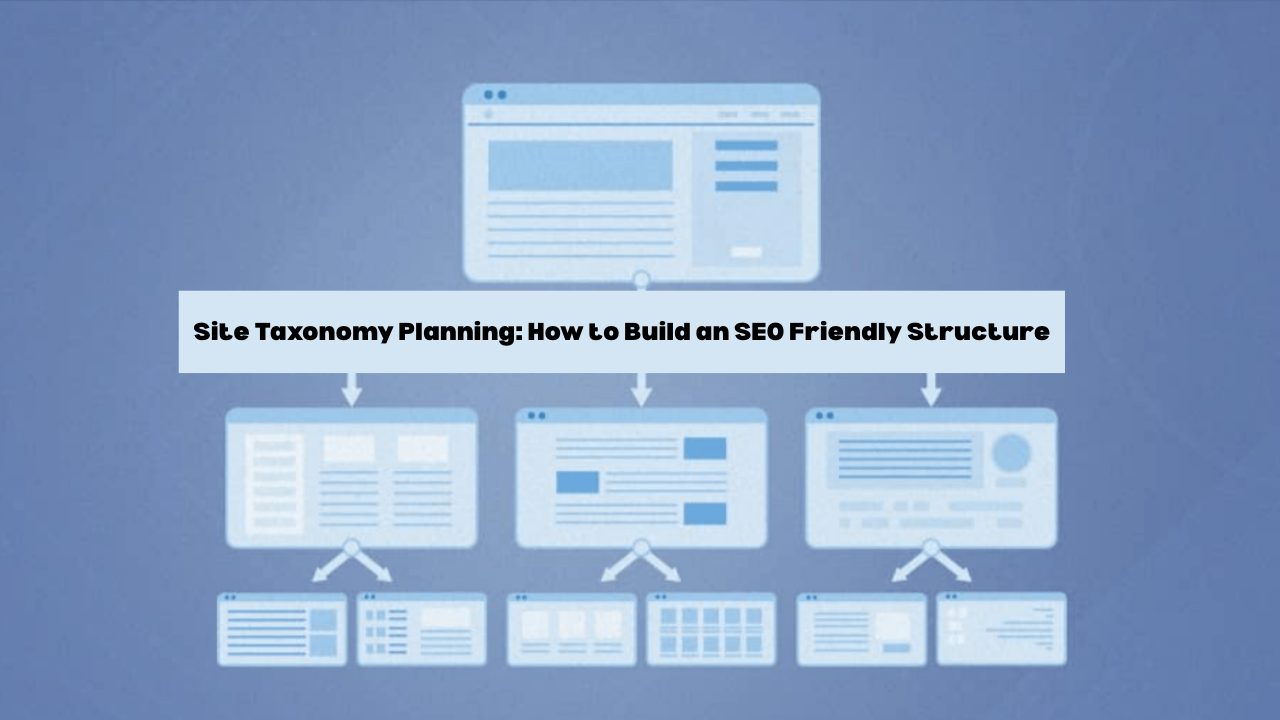
Site Taxonomy: What It Is and Why It Matters for SEO
A clear site taxonomy is of importance to proper SEO performance. In this guide, there are included relevant aspects by which proper structuring and optimization of site taxonomy can be realized.
If you work in SEO, you’ve likely heard site taxonomy mentioned in the context of website structure. It refers to how content is organized and how easily your users can navigate through your site.
Optimizing site taxonomy is of utmost importance for SEO pros and is one of the most important steps building a robust and search-friendly website architecture. It will help search engines to understand your website content better and it provides a good influence on those who visit your website.
What Site Taxonomy Means in SEO
Site taxonomy is defying how your website is arranged and how a group of content is put together. This follows the rules about how pages interlink and interacts with one another.
These White-hat approaches affected how Google would crawl your site and made convenient for users to navigate. If the taxonomical process is clear then your site may become easy for the search engines to understand and visitors will find quickly to the contents.
Taxonomy design has a direct impact on SEO ranking. Paying attention to the text design and functionality within the site may have a positive impact on SEO campaigns.
Taxonomy also helps in guiding a structure of Internal Linking. In other words, The internal link profile boosts the SEO performance of the website. When pages are linked logically within the same topics, it helps Google pass value across your site and strengthens your visibility in search results.
Why is Site Taxonomy Important for SEO?
Well-structured site taxonomy helps your users to understand and navigate your website better. When content is logically organized, visitors trust the site more and spend more time reading.
In a less structured website, users fight to get information and then just leave. Good taxonomy improves user experience by making navigation simple and predictable.
Site taxonomy is another important topic in SEO. It helps Google understand the structure of your site, by which it efficiently crawls pages and indexes content. The benefit of putting closely related topics in a hierarchical structure is that the audience, as well as search engines, will understand the site better, leading to improved results in search.
Types of Site Taxonomies
There are two common types of taxonomies used in websites: flat taxonomies and faceted taxonomies.
Flat taxonomies follow a structure of parent–child. When topic relationships are already very well defined, they are the best choice. This gives users and search engines an understanding of how these topics relate to one another and allows Google to move through the content in a more orderly way.
Faceted taxonomies are best examples for developing a website, where the content can be grouped in various ways. They are frequently used for a website with a large number of classifications. A faceted taxonomy does not rely solely on a static hierarchy; it can have content displayed on multiple attributes without being confined to the relationships between these.
How to Build an SEO First Site Taxonomy
The essential thing here is to construct an easy to navigate information architecture which serves both search engines and humans equally well.
Your structure is being pitched; there must be no overload in terms of simplicity. It doesn’t take long to get it wrong when users cannot find content easily or it becomes bothersome to circumnavigate your site.
Comprehensive categories assist people and the search engines in understanding the order of things, making browsing very fluid with a very real technical success nonetheless adding to the user experience.
1. Conduct Proper Keyword and Topic Research
The taxonomic structure of a website establishes where its strength is. Understanding the purpose of keyword-related inquiries helps everybody to perceive the area that raises interest in them. Topic research serves in analyzing the demand for information, yet it is mainly broad.
The collaboration of both is central in allowing one to describe the structure of his/her site in a systematic and user-friendly way. Every category he/she creates should be restated in one solid theme-those outright or implied keywords and the respective groups of pages to be organized under the thematic sun with laser-like precision.
Keeping such a framework benefits the usability of the website, as well as the SEO for that matter. There are no repeated keywords-the focus is the main point, the content, and the natural introduction to the search engine so it can easily understand the undamaged pages of your taxonomies.
2. Keep Your Site Taxonomy Clean & Simple
Having too many categories and subcategories often works against SEO rather than for it. Overly complex structures make significantly harder for search engines to navigate through the website, and likewise, it may make it more difficult for users to find content.
When taxonomy becomes complex, Google can take longer times to crawl and index their pages, while users may have some navigating problems. This increases friction for both the search engines and the users.
A good taxonomy for a website should be clear, focused on a given topic, and easy to follow, which generally means fewer top level categories and only the necessary subcategories. Whether you go for a simple category setup or a silo structure, the cleaner and simpler taxonomy system is usually preferred to navigating a more complex one.
3. Leave Room for Future Growth
Your taxonomy needs to allow ample space for growth. In evitable, it is one day you will run out of topics to write about with the confined categories you might be having.
If your site and the business keep evolving, so will your taxonomies. New content types, new expertise, or movements in audience interests may involve revisiting the categories and even creating new ones.
At the same time, the changes brought in must be judicious. Being too firm might slow growth because it resists change. Constantly changing taxonomy can also hurt SEO. The goal is to strike a balance of a structure liberal enough to allow growth but also remaining substantial, clear, and intuitive, both for users and search engines.
4. URL Taxonomy Directly Shapes Website Architecture
Making your site easy to navigate for both users and search engines is one of the most important goals for any SEO professional.
The way you design your URLs can hugely affect whether your site performs well or badly in the search engine rankings.
Anecdotally, utilizing a hierarchical URL system that mirrors the relationships of your topics enables Google to properly interpret your site while maintains simplicity in navigation for visitors.
In order to illustrate these principles further, examples of URL taxonomy and possible effective structures can be observed :
Examples of Poor and Effective URL Taxonomy
Poor URL taxonomies are often long, confusing, and loosely related to the content. For example:
https://mysite.com/2025/12/31/article-about-seo-tips-and-some-other-things/
https://mysite.com/2024/07/18/random-topic-that-is-kind-of-related-to-marketing-and-more/
https://mysite.com/2023/05/10/how-to-do-something-online-with-many-unnecessary-words/
These URLs are difficult to comprehend, unnecessarily long, and their hierarchal value is difficult to recognize by search engines. They also fail to group related pages logically, which directly affect crawl efficiency and user clarity.
On the other hand, a strong URL taxonomy is simple, organized, and clearly shows the topic and hierarchy. For example:
https://mysite.com/seo/keyword-research-strategies/
https://mysite.com/content-marketing/creating-effective-blog-content/
https://mysite.com/link-building/building-quality-backlinks/
Well-structured URLs like these improve content discoverability, are easier for users to remember, and help search engines crawl and index pages efficiently.
5. Internal Linking of Content from Various Silos
Connecting content between various silos is a key element of a good site taxonomy. These links help search engines understand the relationships between topics across categories.
Do add the link to an anchor with terms that add relevance to what it is you are linking to. This is useful as a signal to Google of the topical information of those pages.
Internal linking also serves to hold onto the soul of user engagement, by guiding visitors to further related content they could find useful amounting to further exploration, engagement retention, and reducing bounce rates.
The proper linking of content across silos ensures an easy crawl for search engines and lets them know how the hierarchy of your content operates and will ultimately strengthen your SEO.
Conclusion
An organized site taxonomy is imperative from both a user and an SEO standpoint because it properly categorizes the site and offers a logically structured URL that makes navigation easy.
Internal linking can be very beneficial here because it essentially helps to stitch together the topic together and may very well indicate to Google about relations between your pages.
If your taxonomy is straightforward, flexible, and drenched with those pillars, your SEO foundation will not only prove lucrative to you but will also become the bedrock of long-term growth and user engagement.
FAQ
How often should I review my Site Taxonomy?
You should review your taxonomy at intervals, especially when putting up additional content, launching new sections, or seeing a change in user behavior. Constant reviews keep your structure organized and relevant.
Can a bad site taxonomy hurt my search rankings?
Yes. A confusing or overly complex taxonomy might make site crawling pretty tough for Google or on the user end, hard to find some content; this will have a negative effect on rankings and engagement metrics.
Should blog posts always follow the main category structure?
Ideally, yes. Blog posts should be organized under distinct categories or topic clusters for both search engines and users to comprehend how content is related.
Is having more categories better, or should one have fewer?
If fewer, well-defined categories are generally better. This significantly minimizes clutter, improves movement, and helps keep search engines in the loop about the main topics of your site.
Will a complete taxonomic construction naturally propagate internal linking?
Of all the things, a well-defined taxonomic structure becomes the framework for linking related pages, invariably reinforcing the topical relevance and dovetailing the appropriate flow of PageRank across the site.