
How to Use AI in SEO: 10 Expert Backed Uses
AI in SEO helps in making the whole optimization process more effective and targeted and at the same time freeing up valuable hours as no time is wasted on routine tasks. If the tools like ChatGPT, Jasper, and Surfer are used properly, they can provide support in research, content planning, and on-page optimizations simultaneously at large. We will take you through the practical ways that AI technology can be used in the SEO process effectively as the teams already do for the sake of results and better workflow.
What Is AI SEO and Why It Matters
AI SEO is the process of using artificial intelligence techniques in the execution of basic SEO tasks like research, content planning, optimization, and performance monitoring. The AI tools can perform data analysis and processing on the whole bunch of searches and SERPs much faster than manual workflows.
AI SEO is not an area that can be ignored because search engines have increasingly become more sophisticated and they want intent matching, topical depth, and content usability rather than the primary keyword. AI can easily detect these ranking signals through competitor analysis, i.e. how web pages are ranked, how the flow is structured and what the searches patterns are, with help of AI tools.
The time that would otherwise have been spent on repetitive analyses is now transferred to areas of strategy development, content creation, and ranking upgrades which can result in positive changes.
Practical Ways to Apply AI in SEO Workflows
1. Analyzing Competing Pages at Scale
SEOs have access to a big data analysis of several competitors at the same time and this process takes up a lot of time that would otherwise be spent on manual research, besides, ranking patterns that affect ranks are also revealed.
These are the major benefits and applications:
- Content Depth Evaluation: It is important to know the depth of the content given in subtopics of competitors. This helps in getting the point where the content needs to be enriched for the creation of more comprehensive content.
- Structural Analysis: AI can compare headers, subheadings and paragraph order to find out how the top pages structure info for legibility and SEO.
- Topic Coverage Mapping: Find the main points of confrontation of competitors and points that are not spoken about at all, thus allowing your content to keep a low profile.
- Content Format Patterns: Know whether the competitors’ approach to engage the audience is through guides, lists, videos, or interactive elements.
- Keyword Distribution Trends: AI is able to show the characters of how competitors include keywords naturally and semantically related terms throughout the content.
2. Keyword Research
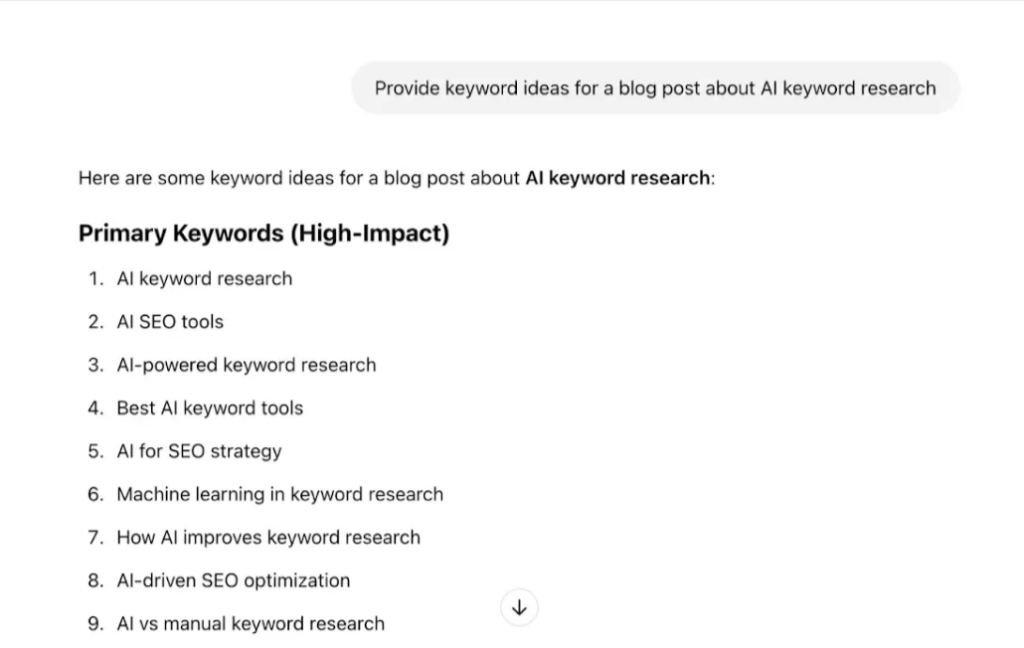
AI is going to show you the actual search queries that users are typing under your targeted topics, this is going to be done through going beyond the mere keyword research and tracking the intent-driven and long-tail variations.
What AI does to keyword discovery:
- Intent Focused Queries: Figure out if the users are after how-to guides, product comparisons, solutions, or reviews.
- Long Tail Opportunity Detection: Unearth obscure, low-competition searches that can bring targeted traffic and, thus, are likely to convert better.
- Question Extraction: Get the very questions users are asking in SERPs and forums so that content can be created to answer them directly.
- Search Phrase Clustering: Group queries so that content planning and targeting can be facilitated.
- Trend Spotting: Follow the trend on upcoming queries or behavior changes allowing you to have an edge over your competitors.
3. Building SEO Focused Content Blueprints
Content can be generated by the AI that can be used to brilliantly outline the content that makes it into ranking, ensuring all important subtopics are addressed along with the questions.
Some advantages offered by automated intelligence content blueprints are as follows:
- Section prioritization: AI indicates the order in which topics should appear so to pptimally match user expectations.
- Logical answer flow: Helps to sequence headings and sections for readability and dwell time improvement.
- Gap identification: It indicates the competition data gaps that you may fill to advance your own content above their works.
- Entity coverage suggestions: Consider these with relevant entities, terms, and various keywords to assist your keyword mapping and page relevance proposals.
- Internal linking prompts: Suggests related pages’ links to assist SEO and assist in enhancing the context that links to them.
4. Generation of Meta Descriptions and Meta Titles Compatible with SERPs
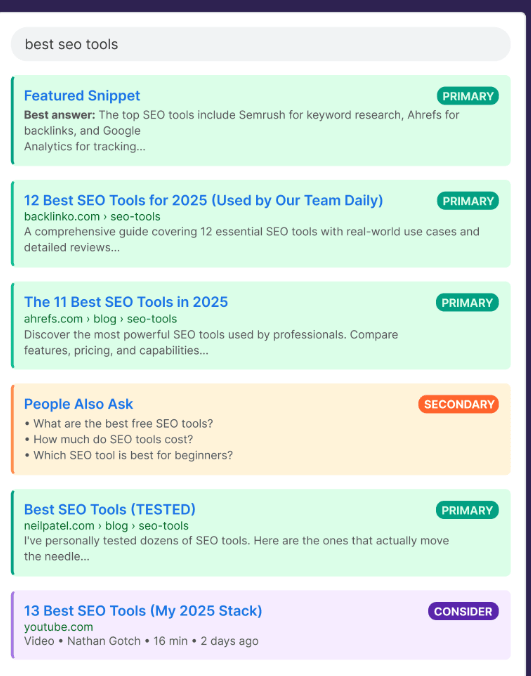
What we mean here is that AI will sift through SERPs to suggest various meta description and meta-title constructs directed at securing clicks while ranking with some compatibility to the searchers’ intent.
Beneficial Sides:
- Title matching to intent: Suggest titles that conform to users’ expectations of the unique value presented.
- Search for the best CTR: Here, the generator ensures it includes a couple of appealing characters, numbers, or power words for helping an increased click-through rate.
- Meta description alignment: Suggest descriptions that convey weight without spelling out the limits of the character count used by Google.
- Positioning assistance for keywords: Ensures the use of keywords naturally in content, avoiding cramming and over optimization.
- SERP filter targeting: Offer suggestions that could nudge your client to be displayed in SERP features–Do more chances to be displayed in featured snippets or rich results.
- Competitive edge: AI exposes the breaches in competitive title and description to highlight your own stand out listing.
5. Assisting with Visual Asset Creation for SEO
AI assists the creation or enhancement of images, diagrams, and flowcharts to make textual content more understandable in the eyes of the audience.
Benefits and applications:
- Better comprehension: Illustrations or infographics make a complex subject to be easily understood by users.
- Image SEO Enhancement: AI will suggest placing alt text with keywords to gain more visibility in the image query.
- Consistency: The visual should look in line with the theme of content and maintain consistency with brand aesthetics.
- User engagement: Mainly intended to keep users there browsing for longer (more significant time on site means better rankings), minimum rated bounce rate, and definitely serious old school ranking signals.
- Custom graphics at scale: Generate visuals at once in numerous pages out of an app rather than endlessly waiting on a graphic designer.
6. Creating Structured Data Drafts for Pages
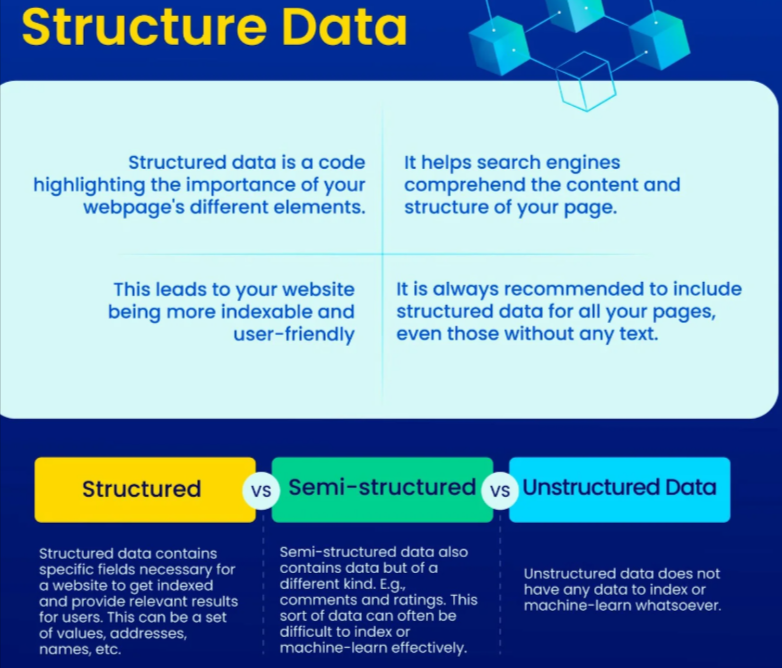
AI can help your content produce markups to quickly push web authors to have them. Error-free schema speaks more fluently, producing rich snippets for articles.
Advantages:
- AI is very fast: It will generate schema structured data for FAQs, Reviews, Products and How tos at a breakneck speed.
- Reduces the chance of errors: Since the templates are already designed, there will be very few mistakes to code with when trying to set up schema manually.
- Ranking in rich snippets: More conventional schema will propel you into better chances of snatching the enhanced listings while parading in the SERPs.
- Consistency across pages: AI will ensure that all similar kinds of page would be having homogeneous schema structure.
- Feasts for semantic search engines: To say the least, the new schema documentation helps search engines see deeper, forming relationships.
- Helps with audits: It is now easier to point of the missing or wrong schema across large sites.
7. Internal Linking : Discover the Best Natural Opportunities
AI traverses the content of a site and recommends relevant internal links in order to improve and facilitate crawlation, provide authority to the content, and improve user experience in navigation.
Use Cases:
- Finding orphan pages: The algorithm helps detect pages without inbound links and maps links for them.
- Semantic anchor text: Linking phrases suggested by an AI engine no longer seem too harsh.
- Topic cluster support: AI models can help you organize pages for semantic groups while increasing authority.
- PageRank flow optimization: By mapping the right linking criteria, the software guarantees that authority flows from high performing web pages to low performing web pages.
- Content association: The AI model identifies logical pathways through which a user can learn about related topics.
- Large scale internal linking: AI can achieve the connection of hundreds of pages reciprocally, with negligible human intervention.
8. Interpreting SEO Data for Actionable Insights
AI processing of huge volumes of SEO data uncovers patterns, anomalies, and opportunities that even the human mind may gloss over.
How it helps SEOs:
- Ranking analysis: Speed up and monitor the changes in rankings with pages and identify any series of patterns.
- Traffic trend detection: Use it to observe dips, spikes, and seasonable patterns to act in accordance.
- Competitor comparison: Matches your performance with competitor data for the sake of bridging gaps and ripening fields of advantages.
- Action prioritization: Using this comparison system, determine any page that must be updated, merged, or optimized first.
- Content performance scoring: Pages get scores based on relevance, user engagement, and potential to outrank others.
9. Page Experience Analysis
AI peruses user interactions with your pages and suggests possible solutions for the reasons that keep rankings down and engagement discouraged. Page experience has a direct impact on SEO and, Alas! Google now favors clean, fast, and user friendly sites.
Key uses of AI in page experience analysis:
- Monitoring Core Web Vitals: Measure Loading Speed (LCP), Interactivity (FID), and Visual Stability (CLS) across many pages for the entire width of a scale.
- Pieces of information on User Behavior: Recognize instances such as high bounce rates, short dwell times, or other spots of low engagement in prioritizing for improvement.
- Evaluation of Mobile User Experience: Assist in the identification of pages that poorly behave on mobile devices so that recommendations for responsiveness or layout modifications can be worked out thereof.
- Verify Accessibility: Oftentimes, it is suggested to rectify accessibility issues such as missing alt text, high contrast ratios, or object obscurities-languages sometimes conflictingly mentioned as languages from both ends on the spectrum and blamed for spoiling UX and hence SEO.
- Readability of Content: AI will gauge paragraph structure, sentence length, and score for readability, suggesting to better suit your audience.
10. AI’s role in Project Specification
The AI proves handy in the project specification to manage and define large-scale SEO projects in a manner that ensures that all tasks stay in line with the set goals.
How AI assists with project specs:
- Content requirements: AI assesses different elements such as word count, headings, target keywords, and entity coverage based on SERP analysis.
- Task assignments: AI consolidates its core strengths of complete and sustainable work tracking for everyone writing, editing, designing, or developing under a structured plan with clear deadlines and priorities.
- Quality benchmarks: AI makes assessments based on parameters of readability, keyword integration, link usage, and content depth, following which the AI gives directions on how best to refine various writing techniques such that all users, search engines, and targeted consumers come to agreement.
- Competitor benchmarks: AI evaluates specific performance aspects for given pages of competitors with the intent of setting achievable goals for each project.
- Performance Monitoring: AI enables tracing the landmarks and observing every eventuality, incident to ensure quality in mere magnitude and timekeeping, whether or not the work is properly being done.
Conclusion
AI has revolutionized the way SEO practitioners organize, optimize, and grow their strategies. AI tools help save a lot of time by conducting competitive analysis and content planning, evaluating page experiences, and managing projects. Now that a more assertive stance is built upon AI, SEO teams are freer to pay more attention to strategy and excellence–basic rankings and engagement.
FAQs
What is AI SEO?
In AI SEO, manhood leans on an armful of artificial intelligence tools for keyword research, content strategizing, on-page optimization, and data crunching to enhance search engine ranking.
Can AI replace human SEO professionals?
AI is never a replacement for human beings. AI is a tool that dramatically helps make labor intensive tasks efficient. However, human wisdom is the backbone; the key lever; the source of creativity in SEO-at least to ensure a Website trend syncs with what it’s expected of in terms of user intent.
What are the best AI tools for SEO?
The top AI SEO tools are tools like ChatGPT, Jasper, Surfer, Clearscope, and SEMrush AI for purposes including research, precise optimization of web content, and other analyses.
How do AI help in keyword research?
AI pinpoints actual search queries, Long Tail variations and intent based keywords from the SERPs, autocomplete suggestions, and competitor content, uncovering opportunities-less referential in traditional keyword research tools.
Is AI useful for technical SEO?
Yes, it can read page experience, Core Web Vitals, schema markup, internal linking, and technical elements and present suggestions for better rankings.
How do I implement AI in my SEO workflow?
Apply AI for research, content designs, metadata optimization, page evaluation, and project management. Always take a close look and ensure sole prominence of the found AI writes.